author

By Nina J P Evans

Thursday, May 26, 2016

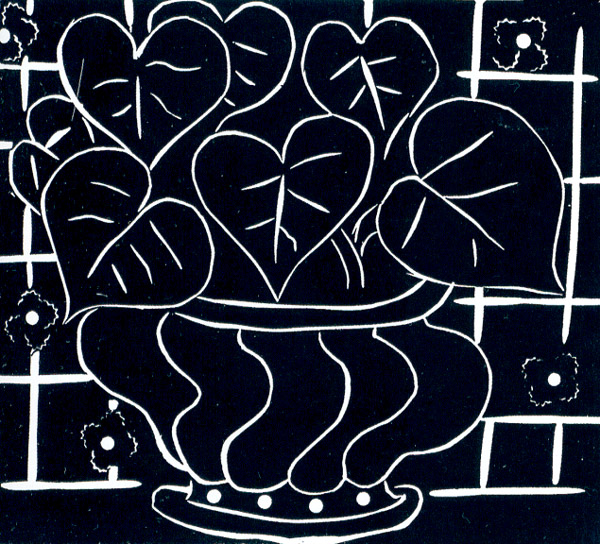
Plant drawings by Henri Matisse

He drew every day of his life, even on his deathbed he drew. Once to create a single piece of work he made more than a thousand drawings. Every day he drew from life and what he drew from his art was life itself.
 text from: Matisse: Drawing Life, Queensland Art Gallery | Gallery of Modern Art

Tuesday, May 24, 2016

Plant drawings by Ellsworth Kelly

One of the first drawings I did in Paris - I wasn’t thinking of doing drawings, but somehow or other, I kept drawing - I bought a hyacinth flower with a lot of leaves, just to make me feel like spring. ~ Ellsworth Kelly

Brush and ink, watercolour and pencil drawings by Ellsworth Kelly

Ellsworth Kelly: Photographs

Barn Wall, Meschers 1950 Gelatin silver print 8 1/2 x 12 5/8 inches; 22 x 32 cm

I decided to revisit Ellsworth Kelly, although recently deceased his photographic work makes for an excellent source of study and contemplation. Illustrating the visual mind of an artist. His pieces are complementary to his paintings ...The process as a method of studying forms nature. This blog post is going to be looking at Kelly’s black and white photography. I know as an artist it must be pretty daunting staring at a blank canvas, as it is with any blank page in a notebook or new computer document. Photography has the added benefit of improving visual design and layout sensibilities, so it’s interesting to compare the medium of photography to his paintings. He favoured black and white as opposed to colour photography, meaning that he wanted to emphasize key elements: such as lighting, shape, form and texture, without colour values influencing the compositional outcome.

In the photo titled Barn Wall 1950, the texture of the wood is very softly focused, the eye is drawn to the tension created by the horizontal line that breaks up in the far right of the composition, and the natural curvature of the wood. With Beach Cabana 1950 a windbreaker is photographed, a very simple object with a touch of modernity, but Kelly’s observation of the familiar uses the vertically striped canvas to create tension points with a top inverse edge and lower irregular alignment. The photo Pine Branch resembles the variable quality of brushstrokes in line to his painting titled Brushstrokes Cut into Forty-Nine Squares and Arranged by Chance, and again with the image Sidewalk, Los Angeles, there’s an astute observation of light and the shadow line quality. He is drawn to geometric shapes in both his paintings and photography, his photographs like his paintings show us the abstract beauty of forms timelessly seen.  


 Pine Branch and Shadow, Meschers 1950
Sidewalk, Los Angeles 1978
 Shelled Bunker, Meschers 1950
 Under the Boardwalk, Long Island 1971
 Stairway, St. Martin 1977
 Broken Window, Paris 1978
 Movie Screen, Waterbury 1982
 Stonework, Meschers 1950
 Beach Cabana, Meschers 1950
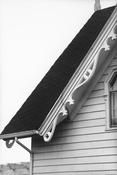
 Roof, Ghent 1972
Hangar Doorway, St. Barthélemy 1977

Monday, November 09, 2015

Ellsworth Kelly

 Méditerranée 1952
Ellsworth Kelly born 1923 is an American painter, sculptor and printmaker, he recently gave a very candid interview in the Guardian. I am sure he’d be a fascinating figure to meet and his generosity with time and storytelling about his paintings and other famous artists he has met with are impressive, to say the least, amusingly saying how Picasso once offered him a ride, which he was too shy to accept, but then again perhaps better to keep the myth of the artist more real. http://www.theguardian.com/artanddesign/2015/nov/08/ellsworth-kelly-want-to-live-another-15-years-monograph-phaidon-tricia-paik Though the interviewer’s comment about the self-portrait holding a bugle as glimpsing his future abstract painting compositions, because of seeing a white v-neck is a bit far-fetched. He explains the meaning and the eventful outcome of the piece quite brilliantly, “The bugle was influenced by [the German expressionist] Max Beckmann,” he says. “Our teacher was German, and he invited Beckmann to come speak to us. Later on, in Paris, I showed this picture to [Fernand] Léger, and he said: this young man should go back to America and blow his bugle.” He laughs. “That wasn't kind. But he was right. I had to go my own way.” Below are just a few sublime pieces that show his unique artistic journey that captures fleeting bold shapes and dramatic colours shifting, suspended magically in mid-air. Clearly going to France made him a better artist. The Ellsworth Kelly interview by the way, is a joy to read!
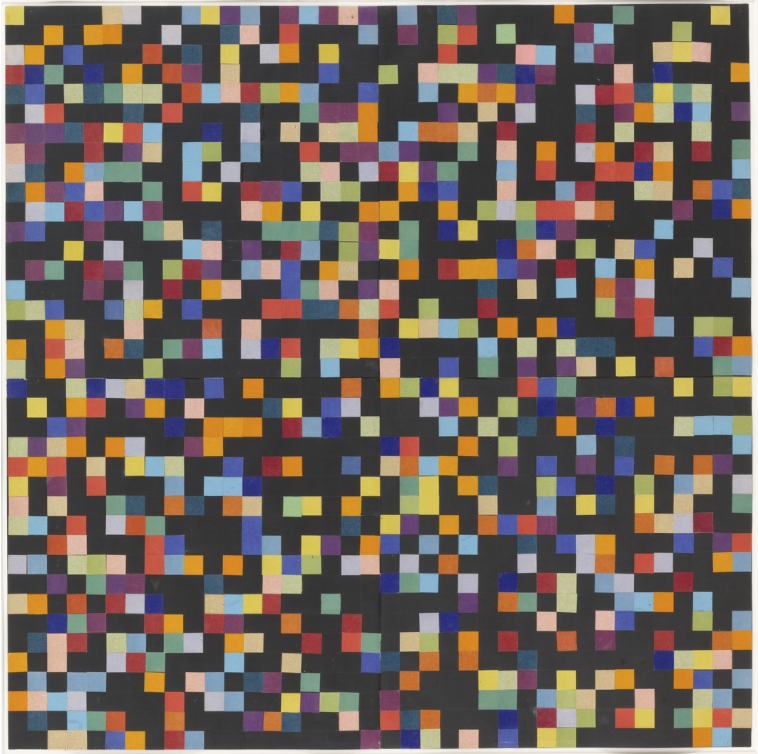
Spectrum Colours Arranged by Chance VI 1951
Broadway 1958
Awnings, Avenue Matignon 1950
Red and White 1952
Spectrum Colours Arranged by Chance II 1951
 Coloured Paper Images 1976
 Gray Curves with Brown 1976
 Brushstrokes Cut into Forty-Nine Squares and Arranged by Chance
 Seine 1951
 Sculpture for a Large Wall 1957
Red Yellow Blue 2000
All images are copyright of MOMA see more here

Saturday, December 06, 2014

Ivan Chermayeff: Cut and Paste

I’ve been online savaging pieces from the summer exhibition titled Cut and Paste by the New York based graphic designer Ivan Chermayeff, though finished now at the De La Warr, I do hope it continues to travel and inspire. This was the first exhibition of his work in the UK as fittingly he is the son of one of the Pavilion architectural partners Serge Chermayef.  The gallery is a beautiful Grade one listed 1935 Art Deco modernist design situated right on the seafront at Bexhill on Sea. I was lucky enough this summer to visit and I greatly enjoyed seeing all the pieces, admittedly before seeing the exhibition, I was unfamiliar with most of his stuff – apart from the iconic trademarks: Pan Am, Mobil, NBC. This exhibition gave me the pleasure of realising instinctively that I was in the presence of one of the greatest living designers!
“Be interested in training yourself to look around, to notice connections, such as a small colour connection, or the tinniest thing that brings two things together.” ~ Ivan Chermayeff
*********
Further Reading